Cash Book & Accounting
Cash book format with examples (single, double and three column)
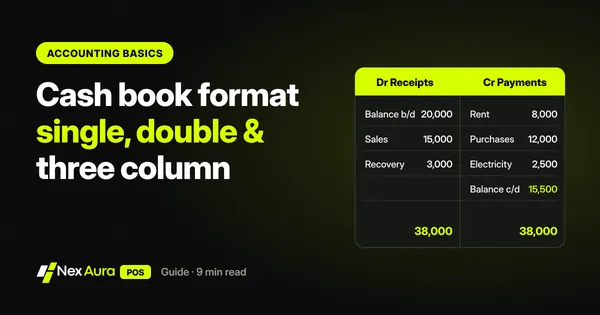
What a cash book is, the single, double and three column cash book formats with worked examples, and a simple daily cash book format for shops.
Small daily payments — tea, courier, stationery, rickshaw fare — add up. A petty cash book keeps them out of the main cash book and under control.
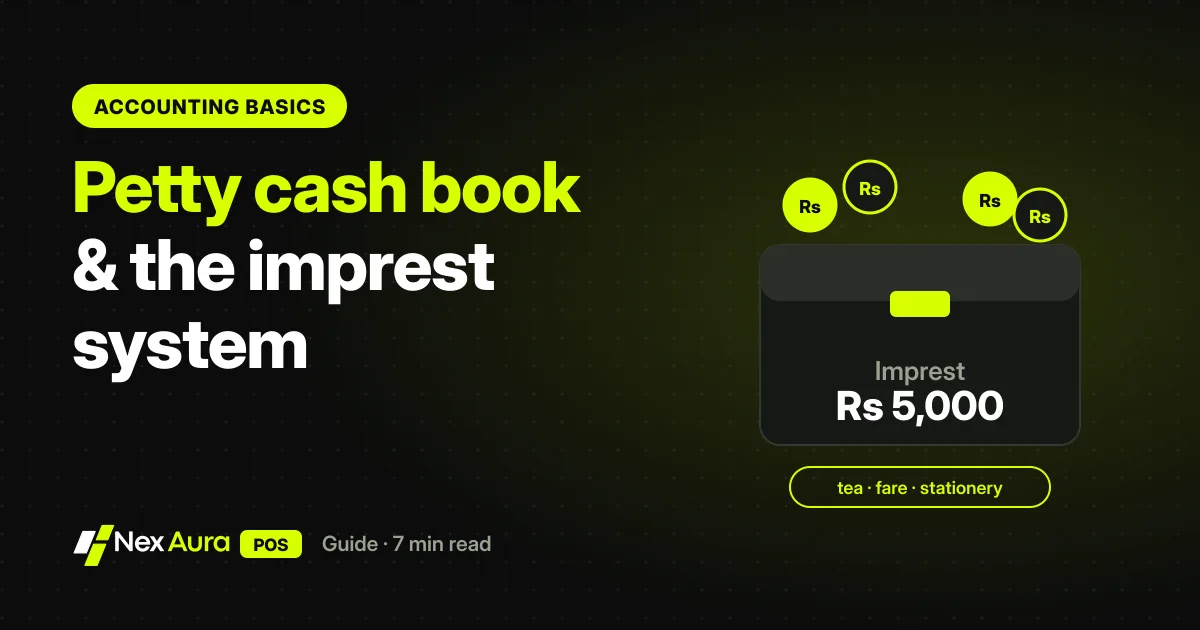
A petty cash book records small, frequent cash payments that would clutter the main cash book — for example postage, cleaning, tea for customers, local transport and small stationery. A person called the petty cashier is given a fixed amount of cash and records every small payment made from it.
Most businesses run petty cash on the imprest system:
Because the float always returns to the same figure, any shortage is easy to spot: cash in hand + vouchers should always equal the imprest.
The analytical (columnar) format adds a column for each common type of expense, so totals per category are ready at the end of the period.
| Receipts (Rs) | Date | Particulars | Voucher | Total paid | Postage | Transport | Tea & refreshment | Stationery | Misc. |
|---|---|---|---|---|---|---|---|---|---|
| 10,000 | 1 Mar | To Cash (imprest) | |||||||
| 2 Mar | By Courier charges | 1 | 450 | 450 | |||||
| 3 Mar | By Rickshaw fare | 2 | 300 | 300 | |||||
| 4 Mar | By Tea for customers | 3 | 600 | 600 | |||||
| 5 Mar | By Register & pens | 4 | 850 | 850 | |||||
| 6 Mar | By Cleaning | 5 | 500 | 500 | |||||
| Total | 2,700 | 450 | 300 | 600 | 850 | 500 | |||
| 2,700 | 7 Mar | To Cash (reimbursement) | |||||||
| 7 Mar | By Balance c/d | 10,000 |
Check: imprest 10,000 − spent 2,700 = 7,300 in hand before reimbursement; after the main cashier pays back 2,700, the balance is again 10,000.
The column totals (Postage 450, Transport 300 and so on) are posted to the matching expense accounts in the ledger.
| Petty cash book | Main cash book | |
|---|---|---|
| Records | Small, routine payments | All cash and bank receipts and payments |
| Kept by | Petty cashier | Main cashier / accountant |
| Typical system | Imprest (fixed float) | Running balance |
| Columns | Expense categories | Cash, bank (and discount) |
In a small shop the "petty cash" is often the drawer itself. The safest habit is to record every small expense the moment it is paid, with a category. In shop software such as NexAura POS, such expenses are recorded as cash out with a category, and the expenses by category report shows where small money goes — see cash book & profit-loss.
Related reading: cash book format with examples.
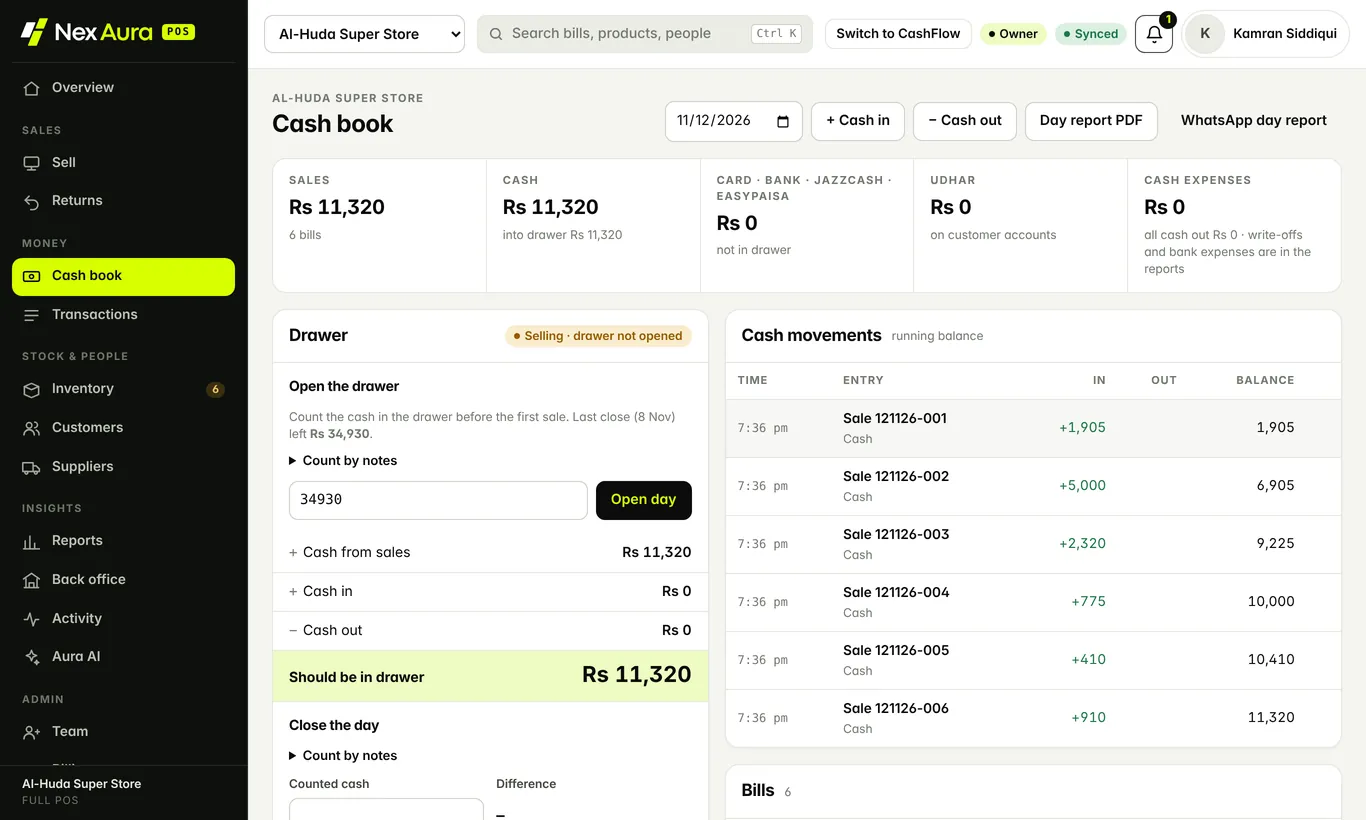
What a cash book is, the single, double and three column cash book formats with worked examples, and a simple daily cash book format for shops.
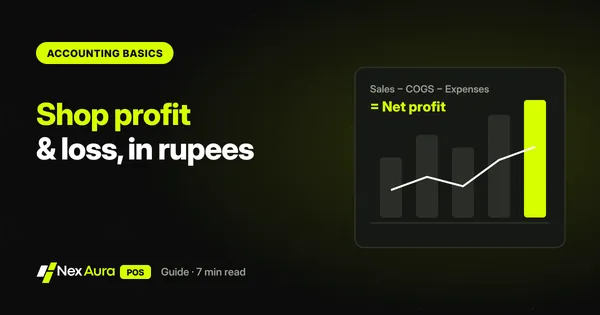
How to calculate shop profit and loss: sales, cost of goods sold, gross profit, expenses and net profit — with a worked example in rupees.
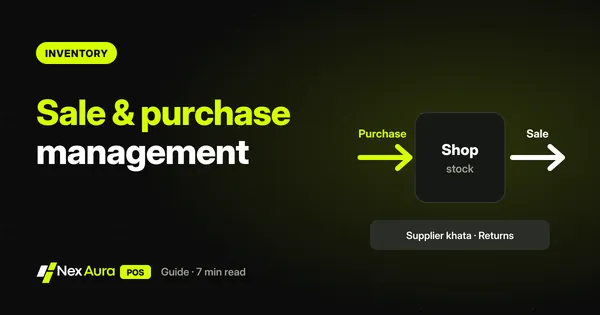
How small shops can manage sales and purchases: what to record, supplier ledgers, credit purchases, returns and when sale purchase software helps.
Start a 14-day free trial — no payment needed. Set up your business, add products or import them from Excel, and make your first bill today.