Cash Book & Accounting
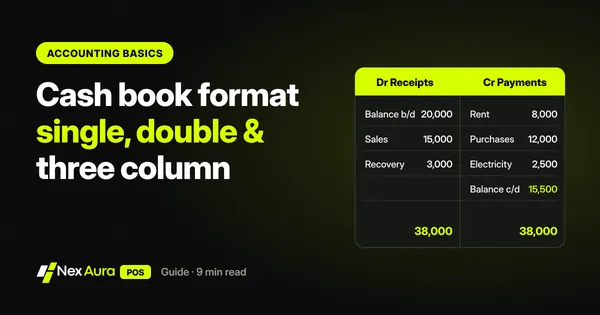
Cash book format with examples (single, double and three column)
What a cash book is, the single, double and three column cash book formats with worked examples, and a simple daily cash book format for shops.
Udhaar keeps regular customers loyal — and quietly eats the profit of many shops. These habits help you keep the first benefit without the second.
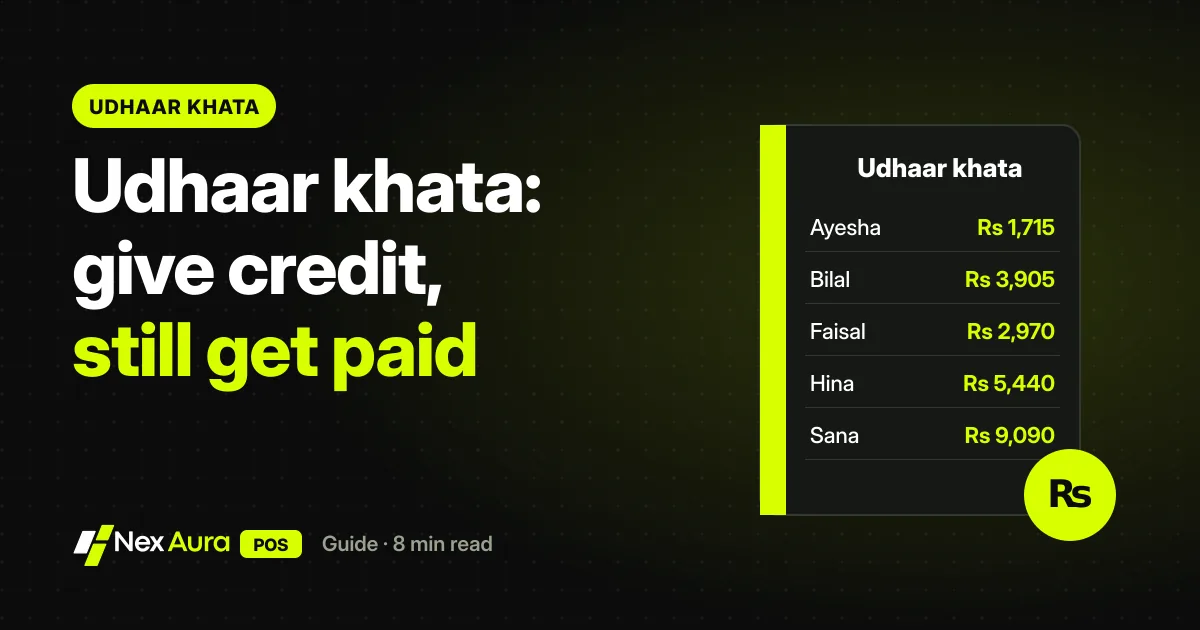
Most shopkeepers know which customers pay late. What they rarely know is the total: how much udhaar is outstanding today, how much was given this month, and how much came back. Without those numbers, a shop can show good sales and still run short of cash every month.
Each entry should have date, customer, amount and what was bought (or the bill number). Two rules matter most:
In Urdu many shopkeepers call this "khata kholna" — opening a khata for each customer. Whether you use a register or an app, the principle is the same.
Recoveries are where most mistakes happen. When a customer pays part of their udhaar:
If the recovery is recorded only in one place, the khata and the cash will never agree.
Pick one day — many shops choose Monday — and:
Polite, regular reminders work better than an angry reminder after three months.
A visible notice like "Udhaar band hai" works only if you apply it fairly; most shops do better with clear limits than with a blanket ban.
| Number | Why |
|---|---|
| Udhaar given this month | Is credit growing faster than sales? |
| Recovered this month | Are customers paying back? |
| Total outstanding | How much of your money is with customers? |
If given is consistently higher than recovered, tighten limits before it becomes a loss.
A register works for a few customers. Once you have dozens of udhaar customers, staff recording entries, or more than one shop, an app saves hours and prevents disputes because every entry has a date and a record of who made it.
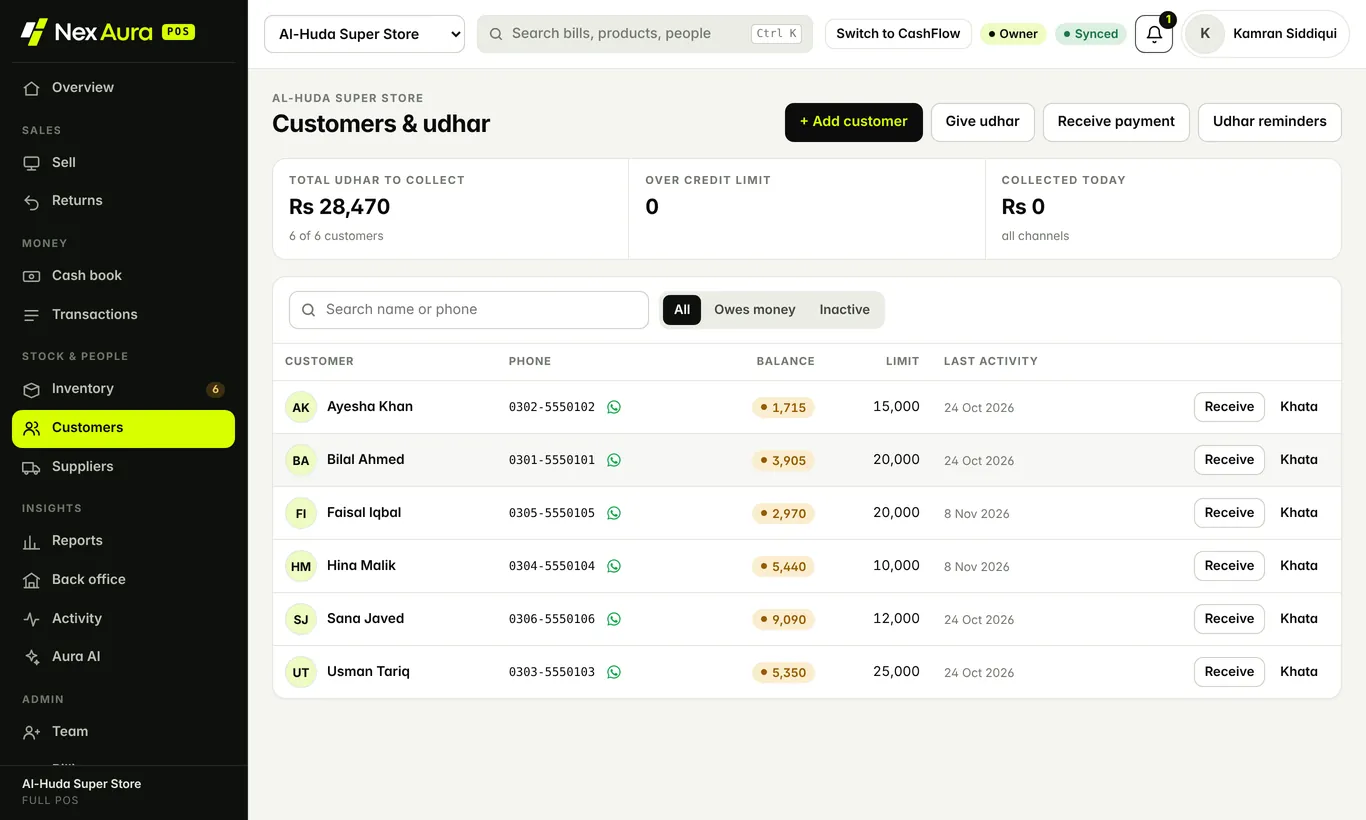
NexAura POS keeps a khata for every customer and supplier, records recoveries in the cash book automatically, shows udhaar given vs recovery in the reports, and lets you control who can add, edit or delete customers. See udhaar khata.
You can also share a customer's khata as a PDF on WhatsApp from the khata screen.
What a cash book is, the single, double and three column cash book formats with worked examples, and a simple daily cash book format for shops.
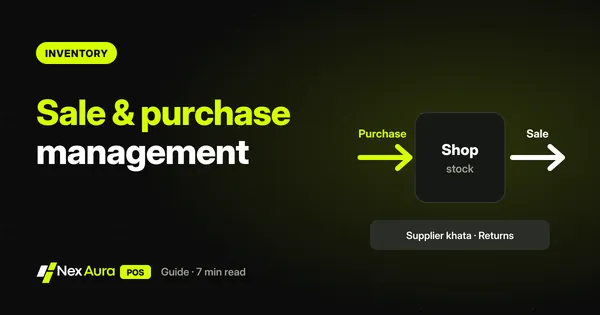
How small shops can manage sales and purchases: what to record, supplier ledgers, credit purchases, returns and when sale purchase software helps.
Running a stationery and book shop in Pakistan: school-season planning, stock groups, supplier credit, udhaar for schools, daily cash and margins.
Start a 14-day free trial — no payment needed. Set up your business, add products or import them from Excel, and make your first bill today.